GH-VING TSUN KUNG FU
GH VING TSUN KUNG FU is an independent Kung Fu club practicing and teaching the Wong Shun Leung Method of Ving Tsun (Wing Chun) Kung Fu.
The System
The Science Of In Fighting!The way of Ving Tsun is very simple…or so it should be. Ving Tsun is recognised all over the world for its simple, direct and efficient approach to unarmed combat. It is a system of fighting that relies solely on concepts and principles rather than named techniques.In a confrontation there is a loser and a winner. Anybody is capable of losing but winning needs a little more effort and thought. The idea of Ving Tsun is how we can best achieve this goal.
Ving Tsun is used to correct our mistakes or the bad habits we’ve developed through our normal life. Everyday we do things through habit without thinking that wouldn’t serve us very well within a fighting scenario. It is human nature that when we are involved in confrontation we are erratic and do things without any control. Its either fight or flight.
An untrained person when he/she fights will tend to swing, punch, grab and kick all over the place in the hope that something connects and has success. This puts us in danger of serious injury and defeat, unless we are lucky of course. The system of Ving Tsun is used to correct and improve these habits so our bodies can become more useful and therefore more effective for combat.
We all have two arms and two legs and there is only so much we can do with our bodies and more so do wrong. Ving Tsun teaches us to adopt a stance and particular posture for balance and mobility. It teaches to increase the amount of power we can distribute through our limbs and it teaches us to strike with precision and control. Ving Tsun also teaches us strategy for combat and a scientific method of fighting that should help us achieve victory.In the beginning we are taught Siu Lim Tau (Young Idea). This “young idea” relates to the development of how to use elbow. This is needed for punching with power whilst also giving us protection and the ability to find a clear line of which to punch through. Siu Lim Tau also teaches us basic structure. We need a good foundation for support and to deliver the correct force. The training of pointing the feet or toes in, the training of the elbows to come in and forward, keeping our hand and body still when executing our arm movements and our balance and impact force are all introduced to the student. Then Dahn Chi Sau for a basic understanding of how the elbow is used.
Once we have developed the idea of the elbow and basic structure we use Chum Kiu and the Muk Yan Jong to develop the idea of the quickest route to the target, the synchronicity of action and the correct use of power and force. Poon Sau and Chi Sau are used to train/improve our correct behavior, thinking habits and reactions as well as our force, balance, distancing and structure. Gor sau and later sparring are used to stress us so we can find our errors and mistakes, which will be revealed under pressure
When we find these mistakes we must then know where to go to correct them so the forms and the drills are used as tools to correct errors and not like other Martial Arts where they use techniques as a one dimensional response to any particular action.….”During training you shouldn’t be concentrating on application and training components that are pointless for actual combat but rather training your body and mind for fighting. We must always be aware of our partner’s mistakes, and ourselves, and correct them accordingly so we can improve. If we were perfect we wouldn’t need to train.Ving Tsun is a complete Martial Skill. Many can fight effectively without certain components and understanding of these components in Ving Tsun but without the correct knowledge Ving Tsun will always seem somehow lacking in certain areas. This has lead to many many versions of Ving Tsun under many different titles that simply do not conform to the basic principles.
The aim of Ving Tsun is to attack your opponent in the most direct manner. To achieve this effectively we must strike hard, have swiftness in our movements and also possess a level of power so that when we strike it renders our opponent unable to continue. How we get there is a different path for everyone and can lead to many frustrations. Our Teachers have an important role in our journeys. If the Teachers approach is flawed then so too will be the students unless the student possesses a certain intelligence and is able to see what can work and what cannot. Unfortunately not everybody has this intelligence and they will blindly continue to follow fantastical scenarios that are not effective in real life combat.The beauty of Ving Tsun lies in its simplicity.
So that we can successfully market Ving Tsun for the future we must be able to keep the explanation of it as simple as the system itself. Siu Lim Tau for the basic idea of the punch and the creation of correct structure. Chum Kiu and the Muk Yan Jong to develop simultaneous movement of the upper and lower body and the correct delivery of power. Chi Sau and peripheral drills to create fluidity of action and spontaneous response. The Long pole to develop increased start speed of the feet, the synchronicity of the limbs and preciseness of action and power. The knives to develop intent, strategy and the awareness of danger. Although the practice of Ving Tsun, for many, is a lifetime ambition and can pose many headaches, the concept of simplicity, directness, efficiency of action and explanation should always be present. If you think of Ving Tsun and your thoughts pose many difficulties something is wrong. The difficulty lies in the development of the body and the skill in executing the actions. This should be our daily goal and whilst some may succeed where others fail we should never give up. Hard work and practice are what make people great. Rome wasn’t built in a day.The way of Ving Tsun is a systematic journey of practicing concepts and principles relating to combat. The end result being the possession of a complete fighting unit and also the achievement of something that has been passed down by some very skilful pugilists of recent times. The evolution of fighting may continue to grow and change but how much more is there to come. Nature will always be our enemy and therefore show us our limits. Regardless of what time period you are from or your views on combat, Ving Tsun will always be right up there if executed by the right person. The skilfulness and cleverness of the people that have shaped Ving Tsun have assured of this.Graham HandburyGH Ving Tsun Kung Fu
About Me
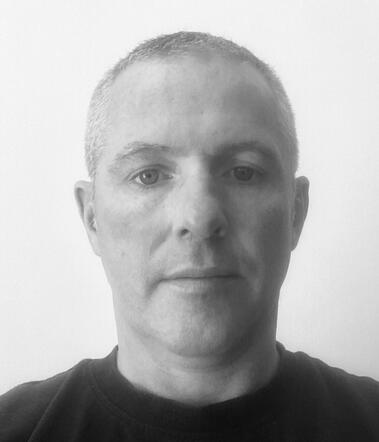
I started Martial Arts at 9 years old inspired by watching Bruce Lee movies. Karate was my first introduction to it and I later went on to kick boxing in the World All-styles Kickboxing Organisation. In order to improve my boxing skills for full contact karate I joined an amateur boxing club which I enjoyed for several years winning most of my bouts and being picked to go on trials for the Western Counties Boxing Team. In 1997 having moved to different area of the UK, I took classes in Jeet Kune Do only to find out that the instructor was teaching elements of Wing Chun and Boxing and calling it Jeet Kune Do which it was not. During that time I enjoyed the elements of Wing Chun and decided to look for a local club. My first venture into Wing Chun was in the Yip Chun lineage but due to my previous experience in boxing, full contact karate and quite a few street fights, I questioned the effectiveness of it and how it would hold up in a street fight. I'd heard rumours in Wing Chun circles that the Wong Shun Leung Method was supposedly much more effective and later came to know that Wong Shun Leung was responsible for teaching Bruce Lee in Hong Kong under the guidance of their teacher, Master Yip Man. The nearest club that taught that method was quite a distance from where I lived but I decided to pursue it anyway. I wanted to become proficient in the system. From here I spent the next 5 years within a UK based Kung Fu club that taught the Wong Shun Leung Method. Due to the rise of the internet and online Kung Fu forums I found more information on Wong Shun Leung Method teachers and was surprised to find out that there was a lot of conflicting information to what I had been exposed to. I wasn't happy about this so decided to travel and meet other Wing Chun instructors in Europe and Hong Kong in order to do my own research. It was at this time in 2006 I met Sifu Philipp Bayer (a first generation student of Wong Shun Leung) after travelling to his school in Menden, Germany. Within the first few hours of this meeting I was blown away not only by Sifu Bayer's skill but his knowledge of Wing Chun. All my doubts and conflicting ideas were all put to rest very quickly so I asked Sifu Bayer if I could join his organisation and represent him in the UK. Over the next 10 years or so I practiced this method and learnt a system of Wing Chun that made sense and that I believed would hold up in a altercation should one ever arise. Unfortunately, and much to my disappointment, that relationship came to an end and I spent several years in the Wing Chun wilderness not knowing whether to continue or not. In 2024 I decided to make an effort to start training properly again and in 2025 decided to start teaching under the name GH-Ving Tsun Kung Fu. My system is based on 29 years of practicing and teaching Wing Chun and is highly influenced by what I was formerly taught by my former Teacher, Sifu Philipp Bayer whom I give credit to. I am currently teaching privately and will be opening a new school in Stroud, Gloucestershire very soon.
Contact Me
Call, Text or WhatsApp - +447739388622
www.gh-vingtsunkungfu.co.uk